
How to Declutter Your Home Without Getting Overwhelmed: A Professional Organizer’s Guide
Have you ever looked around your home and felt completely overwhelmed, unsure where to even begin?
Maybe the kitchen counter has become a collection point for everything that does not have a home. Maybe your closets are overflowing, but you still feel like you have “nothing to wear.” Maybe your basement, attic, garage, or spare room has become a place where things go when you do not know what else to do with them.
If you have been searching for how to declutter your home without getting overwhelmed, you are not alone. Many homeowners struggle with clutter not because they do not know how to clean, but because they do not understand why clutter keeps returning.
The hardest part of decluttering is often not deciding what to keep or what to get rid of. It is understanding the habits, routines, and systems that created the clutter in the first place.
Many decluttering methods focus only on the visible problem: the piles, overflowing spaces, and items waiting to be sorted. But creating a truly functional home requires looking deeper.
Just like a garden, our homes are living systems. What we see on the surface is often the result of what has been happening underneath.
Make it stand out
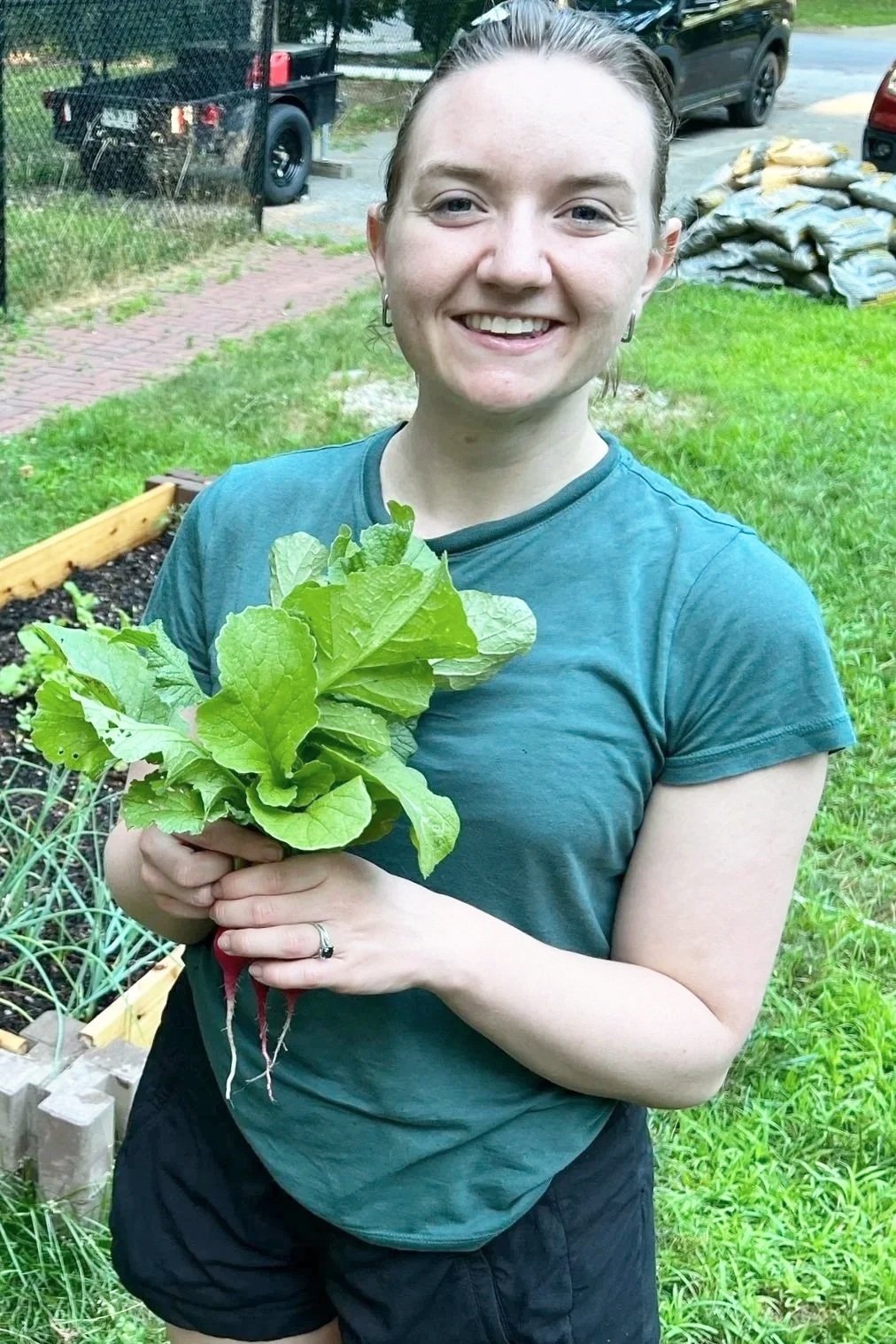
Just as the nutrients in the soil shaped these radishes from my garden, the things we bring into our homes shape the spaces we live in.
Clutter Has a Root System: Understanding the Sources and Sinks of Clutter
I am hard pressed to make a metaphor that does not somehow relate to the garden. This time of year, with everything growing around me, I am constantly reminded that nature has a lot to teach us, even about our homes.
To understand why our homes get cluttered, let’s take a look at the radish plant.
Above ground, radishes put out tall leafy green. But beneath the surface, a very different story is unfolding. Hidden underground the roots we harvest and enjoy store the energy the plant has created.
Before you begin decluttering your home, it helps to understand that clutter has a flow. Just like a garden, every home has places where things begin and places where things accumulate.
In biology, a source is the origin point where something is produced and begins its journey through a system. In a radish plant, the leaves act as a source. Through photosynthesis, they create energy that travels throughout the plant.
A sink is a place where those resources are used or stored. In a potato plant, the tubers are the sink. They collect and store the energy produced by the leaves, allowing the plant to survive, reproduce, and provide us with one of the garden’s most satisfying harvests.
The important lesson is that the radish is not the source of the plant’s energy. It is where that energy ends up. The visible result below the surface is connected to what happened above ground.
Our homes work in much the same way.
Clutter does not simply appear in the places where we notice it. It has sources, which are the habits, decisions, and entry points that introduce items into our homes. It also has sinks, which are the places where those items eventually collect.
A clutter source is where items enter or accumulate in our daily routines. This might be the mailbox where papers arrive, the kitchen counter where groceries and daily essentials land, shopping habits that bring more items into the home than we have space for, or the entryway where bags, shoes, and coats collect after a busy day.
A clutter sink is where those items eventually settle when they do not have a clear destination. It might be the dining room table covered in mail, the junk drawer full of miscellaneous items, the chair that becomes a clothing pile, or the basement where things are stored “for later.”
Just like a potato plant’s tubers reveal what has been happening above ground, clutter sinks reveal what is happening within our daily systems.
The goal of decluttering is not simply to empty the sinks. It is to understand and address the sources.
If we only clear away clutter where it collects without changing the habits and systems that create it, the clutter will eventually return.
A functional home is created by designing home organization systems that make it easier for items to flow where they belong.
Before You Declutter: Stop Fighting the Symptoms
When most people search for how to start decluttering their home, they usually begin with the spaces where clutter is most visible. They clear off the kitchen counter, organize the junk drawer, tackle an overflowing closet, or finally clean out the garage.
And while these tasks can create a quick sense of accomplishment, many people find themselves frustrated when the clutter returns a few weeks later.
That is because clutter is often a symptom, not the root cause.
Decluttering is not just about getting rid of things. It is about understanding why clutter accumulates in the first place and creating home organization systems that make it easier to maintain a functional space.
Remember our potato plant. The tubers growing beneath the soil are not created in isolation. They are the result of everything happening above and below the soil. The sunlight, nutrients, and growing conditions all influence what develops below the surface.
Our homes work the same way. The clutter we see is often the result of invisible systems happening behind the scenes. Our routines, habits, life circumstances, shopping decisions, schedules, and the way our spaces are designed all influence how clutter moves through our homes.
Before you begin organizing your home, take time to observe what is really happening.
Ask yourself:
Where does clutter consistently collect?
If your dining room table is always covered in mail, receipts, and paperwork, the problem may not be the table. It may be that your home needs a simple paper management system.
If your kitchen counters are constantly crowded, the issue is usually not a lack of space. The issue is that everyday items do not have convenient homes.
What items are entering my home regularly?
Clutter often begins before an item ever reaches its final resting place. Packages, purchases, school papers, gifts, and everyday household items all enter your home through different sources. Without a system for processing them, they eventually become clutter.
What areas of my home create the most friction?
A functional home should support your daily life. Maybe mornings feel stressful because clothing, bags, and essentials are difficult to find. Maybe preparing meals feels overwhelming because your kitchen is not organized around the way your family actually cooks and eats.
The goal of decluttering is not to create a perfectly minimal or empty home.
The goal is to create a functional home that supports the life you want to live.
Before removing items, understand the system behind them. Once you know where clutter comes from and why it collects, decluttering becomes less overwhelming because you are no longer just cleaning up the mess.
You are creating a home that makes everyday life easier.
My Approach to Whole Home Organization: The Three C’s of The Making Room Method
I apply this same methodology to my work as a professional organizer.
When helping clients with whole home organization projects, I always recommend starting with the part of the home that is going to be the least sentimental.
Typically, these are the spaces we consider “storage rooms”: the basement, garage, attic, shed, or even the guest bedroom that has slowly become a place where things are put away and forgotten.
Starting with these spaces serves an important purpose. Before you can create functional organization systems throughout your home, you need to create the capacity for those systems to work.
A home cannot function well when every storage space is already full.
Once you understand where clutter comes from and have created space to work, the decluttering process becomes much more manageable.
That is the foundation of The Three C’s of The Making Room Method: Clear, Categorize, and Cultivate.
Each step builds on the one before it. Skipping a step often leads to frustration, while following them in order creates home organization systems that are easier to maintain long term.
1. Clear
Create the space your home needs to function.
Before you can organize your home, you need to create space for it to function.
Many people jump straight into organizing closets, kitchen cabinets, or drawers, only to discover they have nowhere to put the items they do not use every day.
That is why I recommend starting with your deep storage areas. Basements, garages, attics, storage rooms, and even the dreaded guest bedroom often fall into this category.
By clearing these spaces first, you create room for seasonal, sentimental, and infrequently used belongings before you begin organizing the rest of your home.
As you work through each room, ask yourself whether each item still serves your current life.
Does this item support the way my family lives today?
Do I use this enough to justify the space it takes up?
Would I choose to bring this into my home again?
Remove what you no longer use, need, or love, and create the capacity your home needs to support what truly matters.
The goal of clearing is not to create an empty home.
It is to create room for the life you actually live.
2. Categorize
Give every item a home based on how you use it.
Once you have decided what stays, it is time to give every item the right home.
Instead of organizing by category alone, organize within each category by frequency of use.
The most accessible spaces in your home should be reserved for the items you use most often.
Every item in your home falls into one of three use frequencies:
Daily Use
Items used every day should be visible, convenient, and require very little effort to access.
Examples include:
everyday dishes
toiletries
frequently worn clothing
kitchen tools used regularly
These items deserve the easiest access because they support your daily routines.
Weekly or Monthly Use
Items used on a weekly or monthly basis should stay in the room where they are used but can be stored in cabinets, closets, drawers, or less accessible areas.
Examples include:
specialty kitchen appliances
hobby supplies
cleaning supplies
seasonal clothing
These items are important but do not need to occupy your home’s most valuable storage space.
Yearly or Occasional Use
Seasonal, sentimental, or rarely used items belong in deep storage.
Basements, attics, garages, and other storage areas are designed for these items, freeing your everyday spaces for everyday living.
As a general rule, avoid storing the same type of item in multiple places unless there is a practical reason to do so.
Keeping similar items together makes them easier to find, prevents unnecessary duplicates, and helps your home stay organized over time.
A well-organized home is not one where everything is hidden away.
It is one where everything has a logical place.
3. Cultivate
Create systems that allow your home to thrive.
An organized home is not built in a day, and it is not maintained through willpower alone.
Like a thriving garden, your home needs simple systems and occasional tending.
As you go about your daily routines, pay attention to where clutter naturally returns. Treat any noticeable clutter sinks as feedback that can reveal opportunities to improve your systems.
Remember, a clutter sink is not a sign that you failed.
It is information.
It is showing you where your home needs a better solution.
Ask yourself:
Is this item stored where I naturally use it?
Is it easier to put this away than to leave it out?
Has a routine changed that my home needs to adapt to?
Can this system be made simpler?
As your life changes, your home should change with it.
Continue refining your systems, adjusting your storage, and addressing new clutter sources before they become overwhelming.
The goal is not to create a perfectly organized house.
The goal is to cultivate a functional home that supports your routines, reduces daily friction, and gives you more time and energy for the things that matter most.
How to Avoid Feeling Overwhelmed While Decluttering Your Home
Decluttering your home is more than a physical process. It is also a mental one.
Every item you touch requires a decision, and when you multiply those decisions by years of accumulated belongings, it is easy to understand why many people feel overwhelmed before they even begin.
The goal of decluttering is not to rush through your entire home in one weekend. Sustainable home organization happens through thoughtful decisions, manageable steps, and systems that support the way you actually live.
Here are a few decluttering tips to help you make progress without burning yourself out.
Leave Sentimental Items Until Last
Sentimental items are often the most difficult category to declutter because they carry memories, emotions, and stories.
If you begin your decluttering journey with the most emotionally charged items in your home, you may spend hours making very few decisions and quickly lose momentum.
Instead, start with easier categories where the decisions are more straightforward.
Build confidence by clearing items that no longer serve your current life before tackling the belongings that hold deeper meaning.
By the time you reach sentimental items, you will have practiced your decision-making skills, created more physical space, and developed a clearer understanding of what truly deserves a place in your home.
Do Not Declutter for More Than Four Hours at a Time
Decluttering requires focus, energy, and hundreds of small decisions.
While it can be tempting to dedicate an entire day to transforming a space, working for too long often leads to exhaustion and decision fatigue.
After several hours, many people stop making thoughtful choices and start making reactive ones:
Keeping items simply because they are tired of deciding.
Getting rid of things just to finish.
Or abandoning the project altogether.
A focused two to four hour decluttering session is often more productive than an exhausting marathon.
The goal is not to do everything at once.
The goal is to make steady progress that you can maintain.
Close the Loop Before You Walk Away
One of the biggest mistakes people make when decluttering is stopping in the middle of a project.
They leave behind piles to sort, donation bags waiting to leave, and items scattered around the room with no clear home.
While it may feel like progress, an unfinished project often creates a new source of stress.
Instead, make it your goal to bring the space to a “finished” point before ending your decluttering session.
That does not mean the entire room needs to be perfect.
It means:
Trash and recycling have been removed.
Donations are gathered and ready to leave.
Items that belong elsewhere have been relocated.
Remaining belongings have a temporary or permanent home.
The space is usable again.
Think of this like tending a garden.
You would not plant seeds, leave tools scattered everywhere, and walk away indefinitely. You would put things back in order so the garden is ready for the next day of care.
A finished space gives you momentum. It allows you to enjoy the progress you made and prevents unfinished projects from becoming another form of clutter.
When You Hit Decision Fatigue, Change the Type of Work
Decision fatigue is one of the biggest reasons decluttering projects stall.
If you find yourself staring at every item for too long or feeling unable to make another decision, it may be time to switch tasks.
Decluttering does not always have to mean making difficult choices.
When your brain needs a break, pivot to something easier:
Sorting items you already know you want to donate.
Gathering trash and recycling.
Grouping similar items together.
Wiping down shelves or drawers.
Organizing items that have already earned a place in your home.
Sometimes the best way to keep moving forward is not to push harder.
It is to change direction.
Remember, a garden does not grow because it is forced. It grows because it is consistently tended over time.
Your home works the same way.
Decluttering is not about finishing as quickly as possible.
It is about creating a home that can continue to support the life you are growing.
Your Home Should Make Your Life Easier
At the end of the day, decluttering is not really about having fewer things.
It is about creating a home that supports the way you actually live.
Your home should make your daily routines easier, not harder. It should help you find what you need, make space for the activities you love, and reduce the small frustrations that add up throughout the day.
A functional home does not happen by accident.
It is created through thoughtful decisions, intentional systems, and a willingness to adjust as your life changes.
Just like a garden, your home requires ongoing care. You clear what no longer serves you, cultivate what helps you thrive, and continue making room for the seasons of life ahead.
If you feel overwhelmed by clutter, remember that you do not need to transform your entire home overnight.
Start with one space.
One decision.
One small system that makes your life easier.
The goal is not a perfectly organized home.
The goal is a home that works for you.
A home where mornings feel smoother.
A home where belongings have purpose and a place.
A home where you have more time and energy for the people, experiences, and moments that matter most.
That is the true purpose of organizing.
Not just making room in your home, but making room in your life.
Ready to Make Room in Your Home?
If you are feeling overwhelmed by clutter and are ready to create a home that supports your life, I would love to help.
At Making Room Organizing Services, I help homeowners throughout Southern New Hampshire create functional, organized spaces through personalized decluttering and home organization services.
Whether you need help with a single problem area like a garage, basement, closet, or pantry, or you are ready for a complete whole-home organization project, we can create systems that make everyday life easier.
You do not need to wait until your home feels impossible to tackle.
A more functional home can start with one conversation.
Ready to make room?
